
How to Choose a Lymphatic Drainage Supplement (Without Falling for Marketing)
Key takeaways
- Disclosed per-herb dosing beats a “proprietary blend” total every time — you can't verify what you can't see.
- Format matters less than consistency: the supplement you actually take daily beats the one with the better absorption profile.
- “Natural” and “clinically studied” are meaningless without specifics; a named study or ingredient is what makes a claim real.
- Compare cost per day of labeled dose, not sticker price — the cheapest bottle usually cuts the key herb's dose, not its manufacturing cost.
- Several common lymphatic herbs interact with diuretics and blood thinners — check with a doctor if you take medication.
- Expect gradual change over 3–4 weeks of consistent use, not a 48-hour transformation.
Choose a lymphatic drainage supplement by checking two things first: does the label disclose the exact dose of every herb, and does it describe support rather than a cure? A "proprietary blend" total hides those doses; a supplement that lists milligrams per herb doesn't.
Format, price, and brand story come after that — they're preferences, not the checks that tell you whether a company is being straight with you.
What actually matters when comparing lymphatic drainage supplements?
Strip away the marketing copy and a comparison comes down to four things: disclosed dosing, a format you'll use consistently, third-party testing (or at least a transparent sourcing statement), and language that talks about support rather than cure. Everything past that — flavor, bottle design, subscription discounts — is preference, not a quality signal.
Liquid drops, capsules, or powder — which format should you pick?
Liquid tinctures absorb faster because they skip the breakdown step a capsule needs, and they're easy to add to water or tea if you dislike swallowing pills. Capsules win on convenience if mornings are already a pill routine — one more capsule costs no extra thought. Powders sit in between: faster than capsules, messier than drops.
The honest answer is that format matters less than consistency. A capsule you take every day beats a tincture that sits in the cabinet because measuring drops feels like a chore.
What ingredients should actually be in the bottle?
Herbalists lean on a short, repeated list for lymphatic support: cleavers, red root (Ceanothus americanus), prickly ash, calendula, burdock root, and dandelion show up across most reputable formulas. A formula built around three or four of these, each at a stated dose, is a stronger sign of a serious product than a formula listing twelve ingredients with no individual amounts.
We wrote a full breakdown of why we picked our own four — and left two traditional lymphatic herbs out — in our ingredients article. If red root specifically catches your eye, it has a stranger history than most people expect.
How do you read a supplement label without getting fooled?
Certain words on a supplement label mean something specific; others mean nothing at all. Here's the difference:
| Label claim | What it actually tells you |
|---|---|
| "Proprietary blend" | Total weight of the blend is disclosed; individual herb amounts are not — you can't tell if the key herb is 400mg or 4mg |
| Herb name + specific mg per dose | You can verify the amount against traditional or published dosing ranges — the real transparency signal |
| "Natural" | Legally means almost nothing; poison ivy is natural too |
| "Clinically studied" | Only meaningful if the label names the study or ingredient studied — otherwise it's a phrase, not a citation |
| Third-party tested | An outside lab checked potency and contaminants — ask to see the certificate of analysis if it's not linked, a check one comparison guide also flags before recommending any brand |
| "Flushes toxins" / "cures bloating" | A disease or cure claim on a supplement is a regulatory red flag, not a benefit |
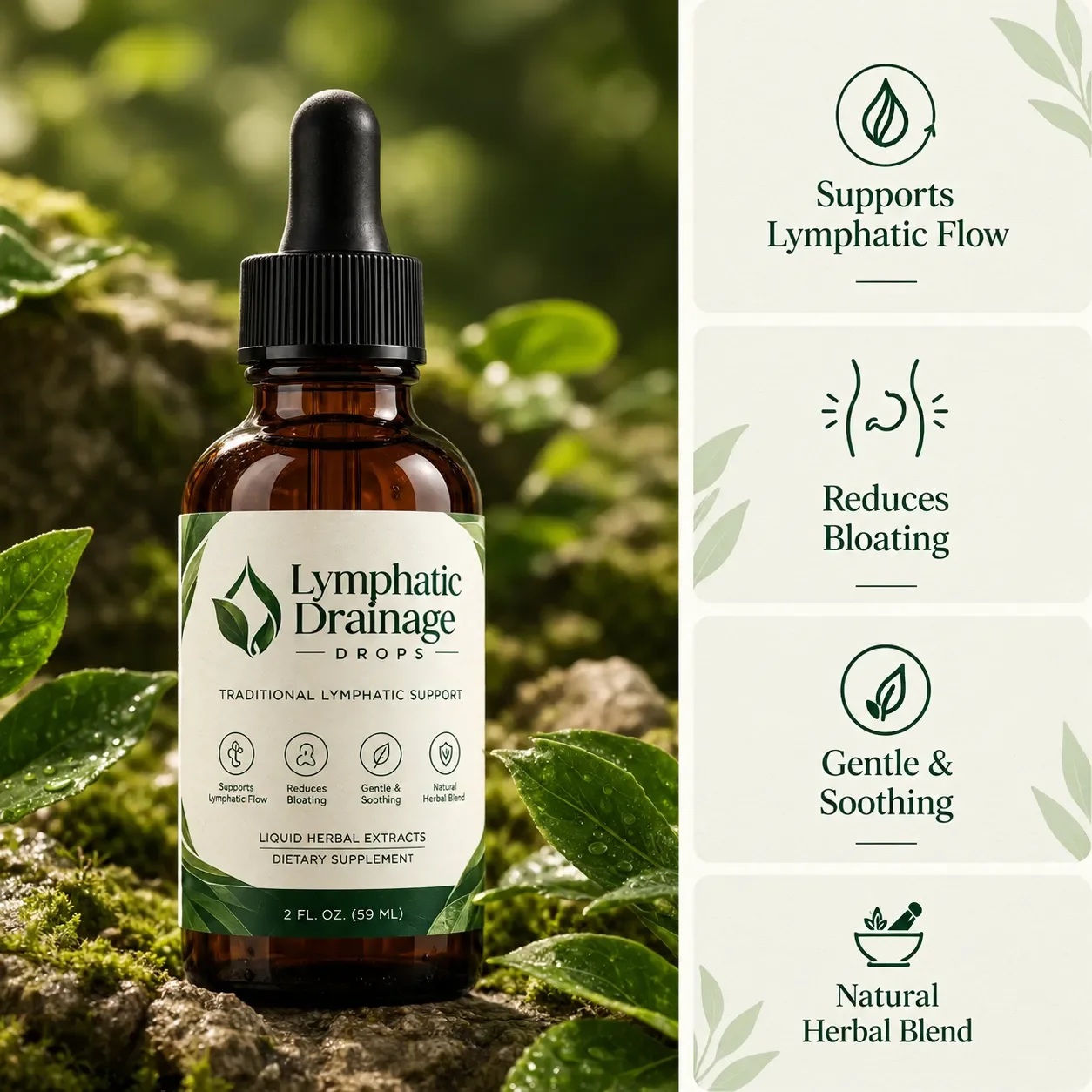
Our own label follows the disclosed-dose column above on purpose — every herb, every milligram, no blend total hiding the mix. That's the standard this guide is describing, not just describing in the abstract.
Which supplement fits your specific goal?
"Best" depends on what you're solving for. A quick way to narrow the field:
| Your priority | What to look for |
|---|---|
| Fastest absorption | Liquid tincture, taken under the tongue or in water |
| Fits an existing pill routine | Capsule, same time as other daily supplements |
| Sensitive stomach | Alcohol-free tincture base or a capsule taken with food |
| Verifying what you're taking | Disclosed per-herb dosing, not a proprietary blend total |
| Traveling or inconsistent schedule | Capsule — no dropper, no spill risk, easy to pack |
Is a cheaper or pricier supplement the better deal?
A month of a liquid lymphatic tincture typically runs $25–$45; capsule formulas land in a similar range per bottle. Sticker price alone doesn't tell you much — divide the price by the number of days the label's dose actually lasts, and compare that daily cost across brands instead.
The cheapest bottle on the shelf usually saves money by trimming the dose of the key herb inside a proprietary blend, not by being more efficient to make. The priciest bottle doesn't automatically mean better dosing either — check the label under the price tag, don't let the price stand in for it.
What should you realistically expect?
Consistency matters more than the first few days. Some people notice less facial or ankle puffiness within a week of daily use; deeper, whole-body changes in how you feel typically take three to four weeks of daily use to judge fairly. If a product promises dramatic results in 48 hours, that promise is doing more work than the ingredients are.
When a supplement isn't the right tool
Herbal lymphatic formulas are dietary supplements, not treatment for lymphedema, venous disease, heart disease, or kidney disease. Several common lymphatic herbs — including dandelion root, burdock root, and red root — can interact with diuretics, blood thinners, and blood pressure medication, so check with a doctor or pharmacist before starting if you take prescription medication. Pregnant or nursing? Skip red root and licorice root specifically, and ask a doctor before starting any herbal formula. And if swelling is sudden, one-sided, painful, red, or hot, see a doctor before trying a supplement at all — that combination of signs isn't something a bottle should be asked to fix, a line every serious comparison resource, including a clinical breakdown of lymphatic supplement mechanisms, repeats for good reason.
Frequently asked questions
What ingredients should I look for in a lymphatic drainage supplement?
Cleavers, red root (Ceanothus americanus), prickly ash, calendula, burdock root, and dandelion are the herbs most consistently used for lymphatic support. Look for each one listed with its own dose rather than buried in a blend total.
Is a proprietary blend automatically bad?
Not automatically, but it hides the one thing you need to judge the product: how much of the active herb you're actually getting. A disclosed-dose label lets you verify that; a blend total doesn't.
How long does it take to see results from a lymphatic supplement?
Some people notice less puffiness within the first week, but judging a lymphatic supplement fairly usually takes three to four weeks of consistent daily use.
Can I take a lymphatic supplement with medication?
Check with a doctor or pharmacist first. Herbs like dandelion root, burdock root, and red root can interact with diuretics, blood thinners, and blood pressure medication.
Liquid or capsule — which absorbs faster?
Liquid tinctures generally absorb faster since they skip the breakdown step a capsule needs. Capsules win on convenience if you already take other pills daily — and the format you'll actually use consistently matters more than absorption speed.
Is “natural” on a label enough to trust a supplement?
No. “Natural” isn't a regulated or meaningful quality claim on its own — look for disclosed dosing and third-party testing instead.