Glycerite vs. Alcohol Tincture: Why Most Lymphatic Formulas (Including Ours) Use Alcohol
Key takeaways
- A glycerite captures roughly 60–70% of an alcohol tincture's extraction strength and is absorbed about 30% more slowly.
- Cleavers, red root, and prickly ash all extract best at 40–90% ethanol — a range glycerin, a weaker solvent, doesn't reach.
- Our own formula uses 40–45% ABV cane alcohol, not glycerin — it is not vegan or alcohol-free.
- Glycerites remain the better choice for children, alcohol avoidance, and (with a doctor's input) pregnancy, despite the extraction trade-off.
A glycerite uses vegetable glycerin instead of alcohol, which makes it alcohol-free but weaker — it captures roughly 60–70% of what an alcohol tincture pulls from the same herb. Most lymphatic formulas, ours included, use alcohol instead, since cleavers, red root, and prickly ash all extract more fully in it.
Neither format is wrong across the board. The right one depends on what you're extracting and who's taking it.
What Actually Changes Between the Two
| Glycerite | Alcohol tincture | |
|---|---|---|
| Extraction strength | Weaker — captures roughly 60–70% of an alcohol extraction | Stronger — pulls the widest range of compounds |
| Absorption speed | ~30% slower into the body | Faster |
| Shelf life | 1–2 years, cool and dark | 4–6 years, cool and dark |
| Minimum concentration to preserve the herb | 55%+ glycerin | 20–90% ethanol, depending on the compound targeted |
| Taste | Sweet, more palatable | Sharper, more bitter |
| Best suited for | Children, pregnancy (with a doctor's input), alcohol avoidance, recovery | Roots and bark needing full-spectrum extraction, longer shelf life |
Why Alcohol Wins for Most Lymphatic Herbs
Cleavers, red root, and prickly ash bark all extract best somewhere between 40% and 90% ethanol, depending on the compound — flavonoids and alkaloids need 40–60%, resinous bark like prickly ash needs closer to 70–90%. Glycerin doesn't reach into that range; it's a weaker solvent overall, and while it captures tannins and mucilage reasonably well, it's specifically not recommended for roots, bark, and other hard plant parts, which describes most of what's actually in a lymphatic formula. Our own formula uses organic cane alcohol at 40–45% ABV for exactly this reason — it's the range that extracts cleavers, red root, and calendula well while staying gentle enough not to require the higher end reserved for resinous herbs.
When a Glycerite Is Actually the Better Choice
Glycerites exist for real reasons, not as a lesser version of a tincture. They're the standard recommendation for children, since the sweet taste beats a bitter, alcohol-forward tincture for compliance. They're generally considered a safer starting point in pregnancy, though still worth a doctor's input rather than an automatic yes. And they're the only option for anyone avoiding alcohol entirely — for religious reasons, personal recovery, or a straightforward preference. None of those reasons make the herb inside stronger; they trade some extraction power for accessibility, which is a reasonable trade for the person making it.
How a Glycerite Is Actually Made
The method is simple, if slow: fill a jar about a third to half full with dried herb, top it off with vegetable glycerin diluted with a little hot water — glycerin needs to make up more than half the total liquid to preserve the herb — seal it, and let it macerate for six to eight weeks, shaking occasionally, before straining. It's the same basic process as making an alcohol tincture, with glycerin swapped in and a longer wait, since glycerin extracts more slowly than alcohol does.
How to Tell Which One You're Buying
The supplement facts panel or ingredient list settles it — look at the base, not the front label. "Organic cane alcohol," "grain alcohol," or an ABV percentage means a tincture. "Vegetable glycerin," "glycerine," or "alcohol-free" on the front means a glycerite. Watch for a label that says "alcohol-free" but lists a percentage of alcohol in small print anyway — some products use a small amount of alcohol as a preservative alongside glycerin and still market themselves as alcohol-free, which is a different formulation than either category above. If the ingredient list doesn't specify a menstruum at all, that's worth asking the company about directly before assuming either one.
Is Our Product Alcohol-Free?
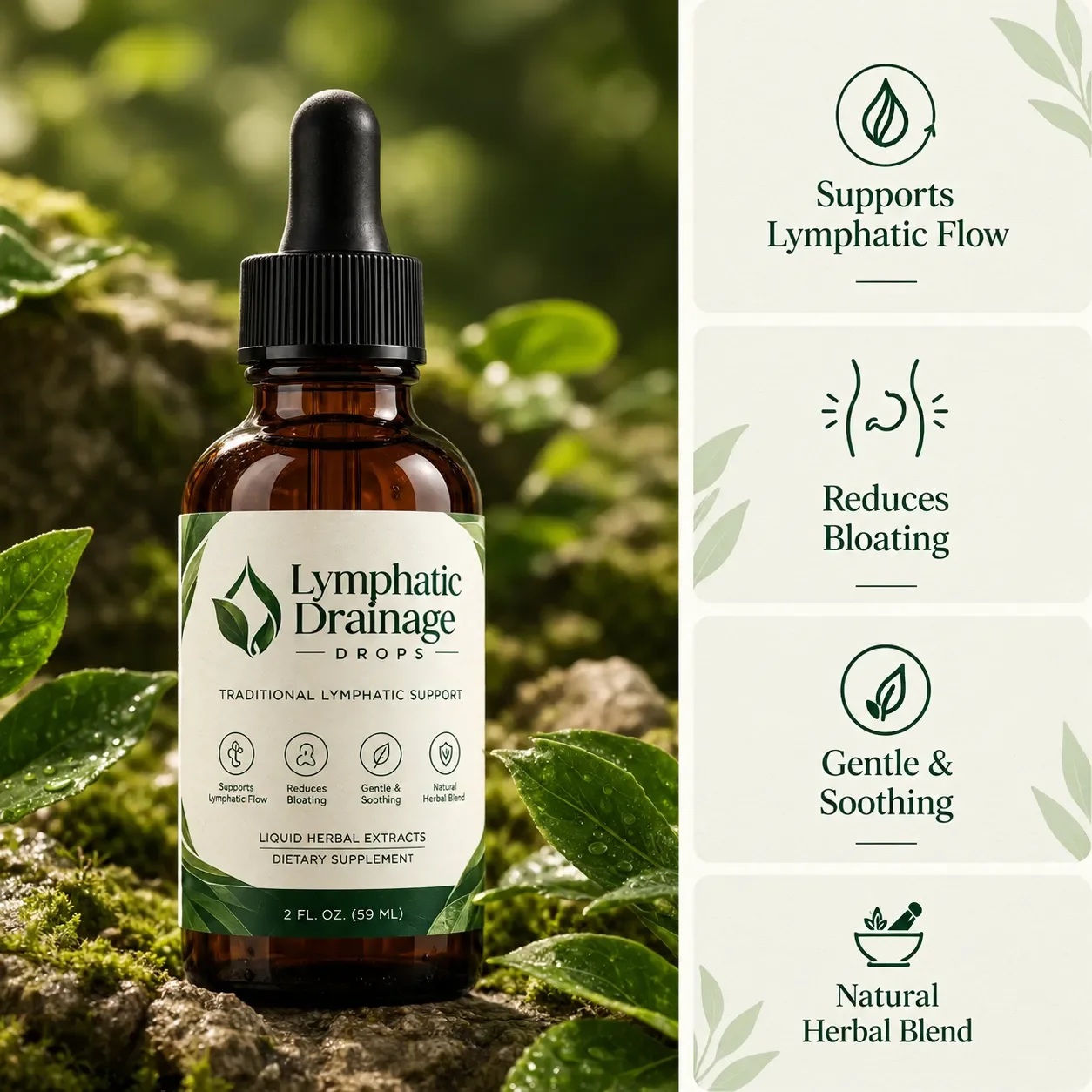
No. Lymphatic Drainage Drops uses organic cane alcohol (40–45% ABV), purified water, and raw wild honey as its base — not a glycerite, and not alcohol-free. A full daily dose of 2 mL carries about 0.9 mL of alcohol. If you need an alcohol-free option specifically — for a child, during recovery, or by personal requirement — that's worth knowing before the bottle arrives, not after.
Glycerite vs. Tincture: Frequently Asked Questions
Is a glycerite as strong as an alcohol tincture?
No. Glycerites typically capture 60–70% of what the same herb yields in an alcohol tincture, and the body absorbs them roughly 30% more slowly. A rough rule of thumb some herbalists use is 2–3 mL of glycerite for every 1 mL of tincture, though this varies by herb and isn't a precise conversion.
Why do lymphatic formulas use alcohol instead of glycerin?
The core lymphatic herbs — cleavers, red root, and prickly ash — extract best in the 40–90% ethanol range depending on the herb, which glycerin doesn't reach. Glycerin is a weaker solvent generally and isn't recommended for roots and bark, which make up most of a typical lymphatic formula.
Is glycerite safe for children?
It's the standard recommendation specifically because it's alcohol-free and more palatable, but "safe" still depends on the specific herb and dose — check with a pediatrician before giving any herbal preparation to a child.
How long does a glycerite last compared to a tincture?
A glycerite needs at least 55% glycerin to preserve the herb reliably and typically lasts one to two years. An alcohol tincture at the right strength, stored in dark glass, can hold its potency for four to six years.
Can I convert a tincture recipe to a glycerite?
Not directly for hard plant parts like roots and bark — glycerin won't extract them as fully, regardless of ratio. It works reasonably well as a substitute for leaves and flowers, with a weaker, more diluted result.
Frequently asked questions
Is a glycerite as strong as an alcohol tincture?
No. Glycerites typically capture 60–70% of what the same herb yields in an alcohol tincture, and the body absorbs them roughly 30% more slowly. A rough rule of thumb some herbalists use is 2–3 mL of glycerite for every 1 mL of tincture, though this varies by herb and isn't a precise conversion.
Why do lymphatic formulas use alcohol instead of glycerin?
The core lymphatic herbs — cleavers, red root, and prickly ash — extract best in the 40–90% ethanol range depending on the herb, which glycerin doesn't reach. Glycerin is a weaker solvent generally and isn't recommended for roots and bark, which make up most of a typical lymphatic formula.
Is glycerite safe for children?
It's the standard recommendation specifically because it's alcohol-free and more palatable, but "safe" still depends on the specific herb and dose — check with a pediatrician before giving any herbal preparation to a child.
How long does a glycerite last compared to a tincture?
A glycerite needs at least 55% glycerin to preserve the herb reliably and typically lasts one to two years. An alcohol tincture at the right strength, stored in dark glass, can hold its potency for four to six years.
Can I convert a tincture recipe to a glycerite?
Not directly for hard plant parts like roots and bark — glycerin won't extract them as fully, regardless of ratio. It works reasonably well as a substitute for leaves and flowers, with a weaker, more diluted result.