
Lymph Drops 101: What They Are, How to Use Them, and What to Check First
Key takeaways
- Lymph drops are herbal tinctures built around cleavers plus 2-4 other traditional herbs, taken sublingually or in water once or twice daily.
- Give any formula 3–4 weeks of consistent use before judging whether it's doing anything — effects are gradual, not dramatic.
- Stillingia root and poke root both carry documented safety cautions per Memorial Sloan Kettering — confirm dosing if either appears on a label.
- The habit works better paired with movement and hydration, since the lymphatic system has no pump of its own.
- Skip lymph drops, or check with a doctor first, if pregnant, nursing, on blood thinners, or managing kidney disease or an autoimmune condition.
Lymph drops are liquid herbal tinctures, usually built around cleavers plus two to four other traditional herbs, taken under the tongue or in water once or twice a day. Give any formula three to four weeks of consistent use before judging it — the effect most people report is gradual, not overnight.
Everything past that basic definition depends on which herbs are actually in the bottle, which is where most beginners skip ahead too fast — straight to "does it work" before checking what they'd actually be taking.
What exactly are lymph drops?
They're an herbal extract — the active compounds from a small set of plants pulled into a liquid base, usually vegetable glycerin and water (alcohol-free) or a diluted grain or cane alcohol. The category exists because the lymphatic system has no pump of its own; it relies on muscle movement, breathing, and posture change to circulate fluid, and the herbs traditionally used here were chosen historically to support that circulation and the tissue around it, not to replace the body doing the work.
What's typically in the bottle?
Formulas vary by brand, but a short list of herbs shows up again and again across the category:
| Herb | Traditional role |
|---|---|
| Cleavers (Galium aparine) | The closest thing this category has to a standard herb — used traditionally to support fluid movement |
| Red root (Ceanothus americanus) or red clover | Associated with lymph node and glandular support in Western herbalism |
| Prickly ash | Traditionally used for circulation |
| Calendula | Traditionally used for tissue and skin support |
| Echinacea | Immune-focused, often added to lymphatic blends for that reason |
| Burdock root | A traditional "alterative" herb, often paired with cleavers |
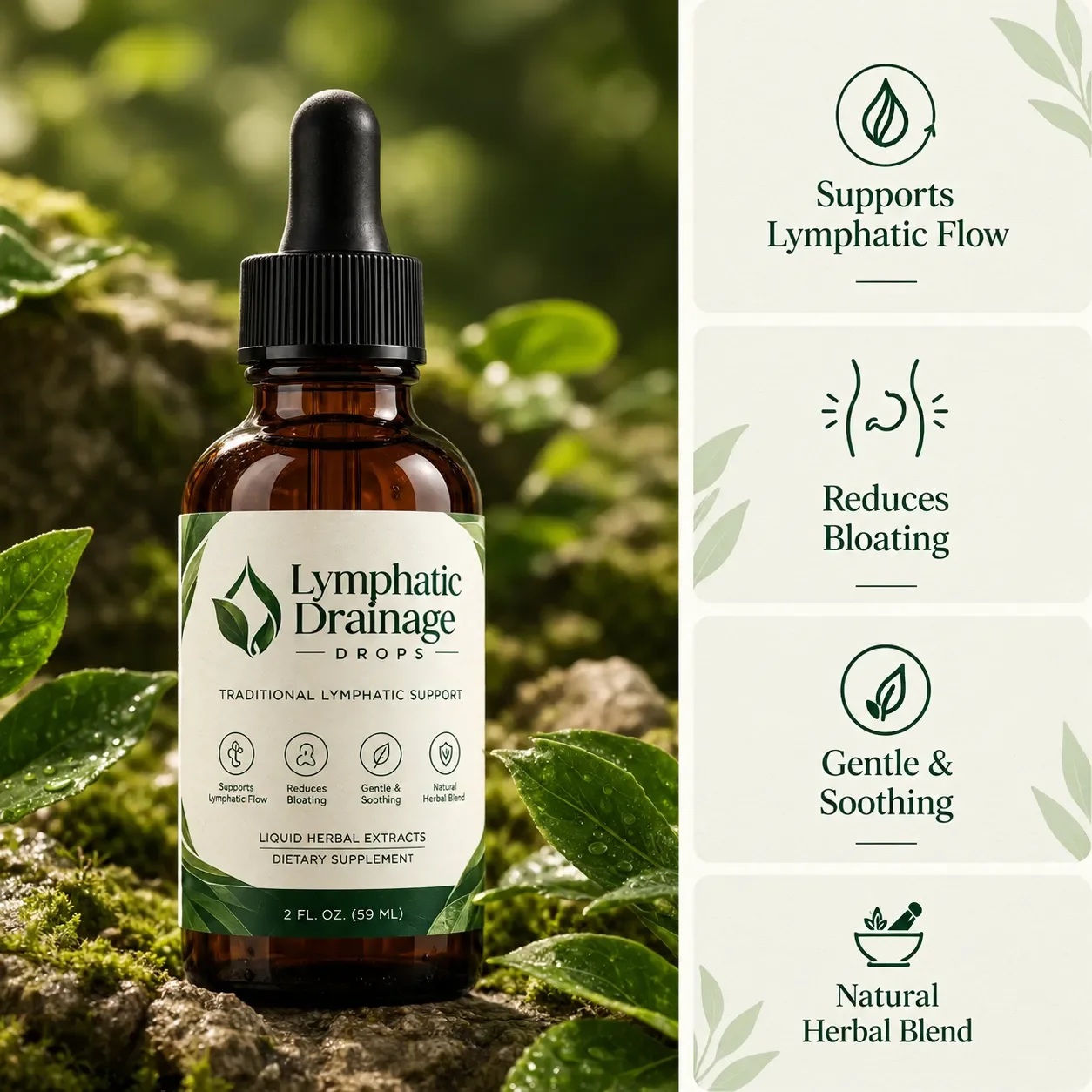
None of this is clinically proven the way a pharmaceutical is proven — it's tradition, carried forward because generations of herbalists kept reaching for the same handful of plants. We go through our own reasoning, herb by herb, in our ingredients breakdown.
How do you actually take them?
Most formulas suggest 1 mL (about one full dropper, roughly 20–30 drops) once or twice a day. You have two practical options: hold the dose under your tongue for 20–30 seconds before swallowing, which lets some of the compounds absorb through the mucous membranes before they hit your digestive tract, or mix it into a few ounces of water, tea, or juice, which is easier if the taste is strong. Consistency matters more than the method — the same time every day, stacked onto a habit you already have (morning coffee, evening tea), beats a technically "better" method you forget half the time.
One practical timing note worth knowing: several of these formulas have a mild diuretic effect, so taking the last dose earlier in the evening rather than right before bed avoids an unnecessary trip to the bathroom at 2 a.m.
What should you actually expect, and when?
| Timeframe | What people commonly report |
|---|---|
| First 24–48 hours | Little to nothing, occasionally mild increased urination as the body adjusts |
| 1–2 weeks of daily use | Some people notice less facial or ankle puffiness and a bit more energy |
| 3–4 weeks of consistent use | The fairest point to judge whether it's doing anything for you specifically |
The honest version: the effect most people describe is subtle — a little less puffy, not a dramatic transformation — and it depends heavily on how consistent you are with the dose, not just which bottle you bought.
Which ingredients should make you check the label twice?
Two herbs that show up in some lymphatic formulas deserve a closer look before you buy, regardless of brand. Stillingia root, at the fresh or overdose level, is a documented irritant per Memorial Sloan Kettering's herb monograph — we cover it in more depth in our guide to checking any lymphatic formula before switching. Poke root (Phytolacca americana) is the more serious one: MSK's own pokeweed monograph documents real toxicity — vomiting, bloody diarrhea, and in case reports, cardiac effects — from amounts as small as a cup of tea brewed with a fraction of a teaspoon of the root. If a formula lists poke root, that's a herb worth confirming is used at a recognized safe dilution, not just present on the label.
How do you make the habit actually work?
Drops alone are the least effective version of this routine. Since the lymphatic system depends on movement, not a pump, pairing your dose with a short walk, a few minutes of stretching, or deep diaphragmatic breathing gives the herbs something to work alongside rather than against a sedentary day. We laid out a full, evidence-graded routine — including which of these habits actually have physiological backing and which are closer to tradition — in our guide to supporting your lymphatic system naturally.
How do you choose a specific product, once you understand the basics?
Once you know what should be in the bottle, the actual buying decision comes down to disclosed dosing, format, and price — covered in full in our supplement label guide, with a real side-by-side of six formulas on the market in our comparison post.
When should lymph drops not be your next step?
Skip them, or check with a doctor first, if you're pregnant or nursing, have an autoimmune condition, take blood-thinning medication, or have kidney disease — several common lymphatic herbs are contraindicated or need caution in exactly these situations. And if you notice persistent one-sided swelling, skin that stays indented after you press it, or swelling with fever or pain, that's a sign for a doctor's visit, not a supplement — lymph drops are a daily wellness habit, not a treatment for a medical condition.
Frequently asked questions
What are lymph drops made of?
Typically cleavers plus 2–4 other traditional lymphatic herbs — commonly red root or red clover, prickly ash, calendula, echinacea, or burdock — in a glycerin or alcohol-based liquid.
How do you take lymph drops — under the tongue or in water?
Either works. Under the tongue for 20–30 seconds allows some absorption through the mucous membranes; mixing into water or tea is easier if the taste is strong. Consistency matters more than the method.
How long until lymph drops start working?
Some people notice less puffiness within 1–2 weeks, but 3–4 weeks of consistent daily use is the fairer point to judge any real effect.
Are lymph drops safe if they contain poke root or stillingia?
Both herbs carry documented safety cautions at higher or undiluted doses per Memorial Sloan Kettering's herb monographs. If either is listed on a label, confirm it's used at a recognized safe dilution before buying.
Can I take lymph drops on an empty stomach?
Most labels don't require food, though taking your last dose earlier in the evening rather than at bedtime avoids the mild diuretic effect some formulas have.
Do I need to pair lymph drops with anything else?
Movement and hydration, ideally. The lymphatic system moves fluid through muscle contraction and breathing, not a pump, so drops taken during a sedentary day do less than the same drops paired with a short daily walk.
Who should avoid lymph drops?
Anyone pregnant, nursing, on blood-thinning medication, or managing an autoimmune condition or kidney disease should check with a doctor first, since several common lymphatic herbs need caution in these situations.